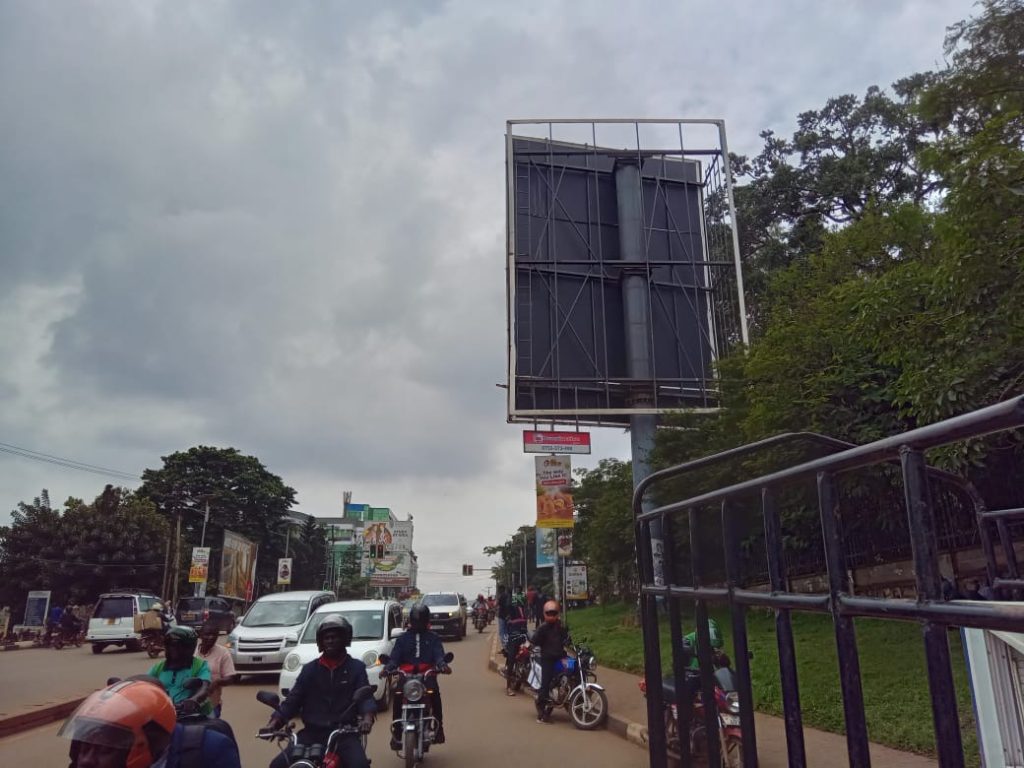
In the world of outdoor advertising, a “blank” billboard usually signifies a transition between campaigns. But in Kampala and across Uganda’s busy transit corridors, a blank frame often tells a more criminal story.
The outdoor industry is facing an expensive and elusive predator: canvas theft. Within hours of a campaign going live, high-grade PVC flex banners are being professionally sliced from their frames, leaving advertisers with nothing but empty steel and a lost budget.
From Brand Awareness to Boda Boda Seats
Why is there such a high demand for “used” advertising? It comes down to the material. Billboard canvases are engineered to be weatherproof, tear-resistant, and incredibly durable. To a thief, a high-definition sneaker ad isn’t just marketing—it’s raw material.
These canvases are being repurposed across the country in surprising ways:
• The Informal Transport Sector: Used to reupholster boda boda seats or as protective leg-covers during the rainy season.
• Logistics: Sown together to create heavy-duty tarpaulins for long-haul trucks and transit goods.
• Micro-Shelter: Serving as waterproof roofing for market stalls or improvised tents in rural areas.
•Agriculture: Used as ground sheets for drying grains like coffee or maize.
The True Cost of the Theft
For the outdoor media agencies, the cost goes far beyond the price of the PVC
It’s not just about the UGX12,000per/sqm piece of plastic, t’s about the broken contracts, the missed impressions for the client, and labor involved to putting the adverts back, especially they are in far flung towns”
When a canvas is stolen, the agency loses credibility with the brand, faces immediate replacement costs, and must deal with the structural damage often caused by thieves hacking away at tensioning cables and lighting fixtures.
Combatting the “Cut”
To protect their investments, many agencies are now turning to new tactics:
1. Mesh Alternatives: Using mesh PVC which is less useful for tents or seating due to its perforated nature.
2. Higher Mounting: Increasing the height of the lower edge of the frame to make “quick-cuts” from the ground impossible.
3. Anti-Theft Marking: Printing “STOLEN PROPERTY” in large, indelible ink on the back of the canvas to lower its resale value in the informal market.
The “Perforation Dilemma”: Sacrificing Beauty for Security
One of the most drastic—and controversial—measures being adopted by Ugandan outdoor media agencies is pre-perforating the canvas. Before a skin is even hoisted into the skyline, technicians use specialized tools to punch hundreds of small holes or slits throughout the material. The logic is simple: if the canvas is full of holes, its “utility value” on the black market drops to zero.
Why Perforation Works (and Why It Hurts)
To a thief, a perforated canvas is useless. It won’t keep the rain off a boda boda seat, it won’t work as a waterproof tent for a market stall, and it can’t be used as a grain-drying sheet. By “pre-damaging” the material, agencies are effectively devaluing the skin for anyone but the advertiser.
The Downside? The Aesthetic Cost.
While the holes are designed to be small, they are rarely invisible. For high-end brands—think luxury watches, high-definition smartphone launches, or premium beverages—the look of the ad is everything.
• Reduced Vibrancy: Light passes through the holes, making colors look less saturated.
• Text Distortion: Small print or fine details can be lost in the “mesh-like” texture.
• The “Vandalized” Look: At certain angles, a brand-new campaign can look like it’s already weathered or damaged, which isn’t the premium feel clients pay for.
The Client’s Choice: A Perfect Ad or a Stolen One?
This puts agencies in a difficult position during client briefings. Do you offer the “High-Risk/High-Fidelity” option (standard PVC) or the “Secure/Low-Fidelity” option (perforated)?
It’s a bitter pill to swallow, we want to give our clients the crispest, most beautiful image possible. But a slightly grainy ad that stays up for 30 days is better than a perfect ad that is stolen on night one.
Moving Forward: Is Tech the Answer?
As the industry grapples with this, the search for a “invisible” deterrent continues. Some are experimenting with:
• Micro-slits: Cuts so fine they are invisible from a distance but cause the material to shred if tensioned for a tent or seat.
• Chemical Odors: Treating the back of the PVC with a non-toxic but foul-smelling “skunk” spray that makes it unbearable to use in a car or home.
Until a perfect solution is found, the perforated billboard remains a visible scar of the struggle between big-brand marketing and the street-level economy of survival.
The battle for the skyline continues. As long as there is a demand for cheap, durable waterproof material, Uganda’s billboards will remain a target for the midnight harvest.